
Gallstones: Symptoms, Diagnosis and When Surgery May Be Needed
Finding out that you have gallstones can leave you with a surprisingly simple question that does not always have a simple answer: “Do I need surgery?”
For some people, gallstones are discovered unexpectedly during an ultrasound or another scan done for a different reason. They may never cause a problem. For others, the first real clue is a sudden episode of pain under the right ribs, often after a heavy meal, sometimes accompanied by nausea or vomiting. And when a stone moves into a bile duct, the situation can become more serious.
That is why the presence of a gallstone on a scan is only part of the story. What matters is the combination of your symptoms, examination findings, blood tests, imaging results and whether the stones are causing complications.
This guide explains what gallstones are, how gallstone pain may feel, how doctors diagnose them, when treatment may be needed, what gallbladder surgery involves and what patients should understand before making decisions about treatment.
What Are Gallstones?
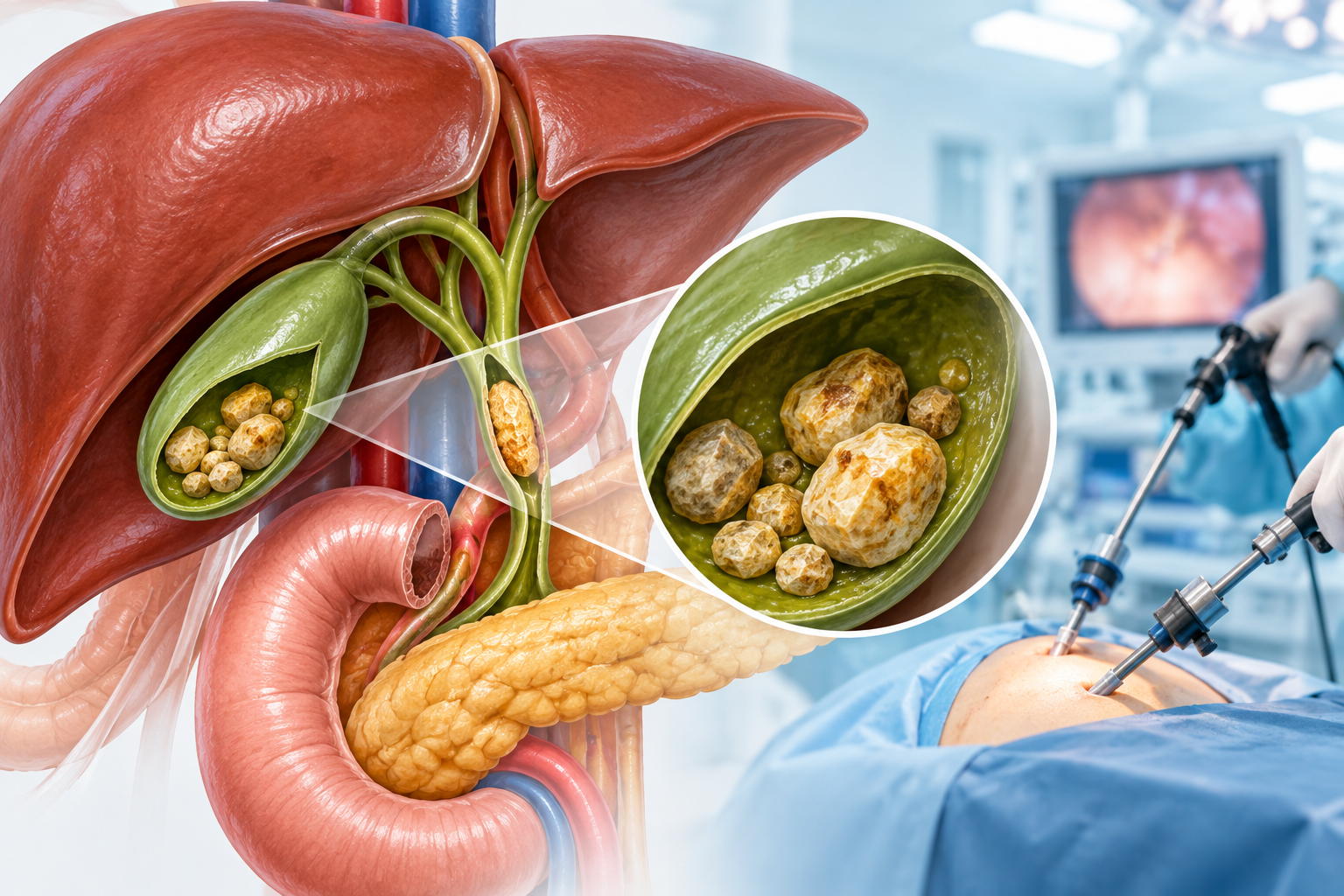
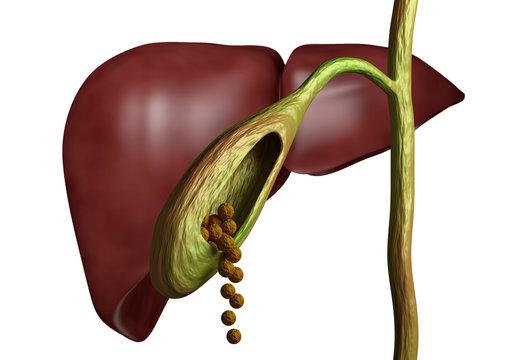
Gallstones are hard deposits that form inside the gallbladder. They can be made mainly from cholesterol or from substances such as bilirubin. A person may have one large stone, several smaller stones or a mixture of different-sized stones.
The gallbladder is a small organ located beneath the liver. Its main role is to store bile, a digestive fluid produced by the liver. When you eat, the gallbladder releases bile through the bile ducts into the small intestine.
The important point is that not every gallstone causes symptoms. Many people have what are sometimes called silent or asymptomatic gallstones and may never know they are there.
Why Do Some People Have Gallstones Without Symptoms?
A scan can show gallstones even when the gallbladder and bile ducts are not being blocked. In that situation, a person may have no pain, no digestive symptoms related to the stones and no evidence of complications.
This distinction is important because treatment is not automatically required simply because a scan reports “gallstones.” Doctors consider whether the stones are actually causing symptoms or complications.
In other words, a gallstone seen on an ultrasound is a finding; a symptomatic gallstone is a clinical problem. The two should not be treated as exactly the same thing.
What Does Gallstone Pain Feel Like?
Gallstone pain is often described as a strong, steady pain in the upper-right part of the abdomen or in the upper middle abdomen. It may last for a considerable period rather than behaving like a brief cramp.
Some patients describe the experience in a very practical way:
“I thought it was acidity at first. The pain started after dinner, but instead of settling down, it became stronger and stayed there.”
That kind of story is one reason persistent or recurrent upper-abdominal pain should not simply be assumed to be indigestion.
Gallbladder attacks may occur after meals and can happen during the evening or at night. Pain can sometimes be felt in the back or shoulder area as well.
Common Symptoms of Gallstones
When gallstones cause symptoms, patients may experience one or more of the following:
- Pain in the upper-right abdomen
- Pain in the upper or central abdomen
- Pain that lasts for several hours
- Nausea
- Vomiting
- Abdominal discomfort after meals
- Repeated episodes of similar abdominal pain
Symptoms are not identical in every patient. Gallstone-related pain can also overlap with symptoms from conditions such as reflux, ulcers, pancreatitis and other abdominal problems. A proper medical assessment is therefore important.
When Gallstone Symptoms Need Urgent Medical Attention
Some symptoms should not be watched at home for too long. Seek prompt medical attention if abdominal pain is severe, persistent or associated with other warning signs.
Important warning signs include:
- Severe or persistent abdominal pain
- Fever or chills
- Repeated vomiting
- Yellowing of the skin or whites of the eyes
- Dark or tea-coloured urine
- Unusually pale stools
- Severe pain spreading toward the back, particularly with vomiting
These symptoms can indicate inflammation, infection or blockage involving the gallbladder, bile ducts, liver or pancreas. They need medical assessment rather than self-treatment.
What Complications Can Gallstones Cause?
A gallstone becomes more concerning when it blocks the normal flow of bile.
Possible complications include:
- Acute cholecystitis: inflammation of the gallbladder.
- Bile duct obstruction: a stone can become lodged in a bile duct.
- Jaundice: blockage of bile flow can cause yellowing of the skin or eyes.
- Cholangitis: infection involving the bile ducts can occur in the setting of obstruction.
- Gallstone pancreatitis: a stone can obstruct the pancreatic or nearby ductal system and trigger inflammation of the pancreas.
These complications are one reason doctors take persistent symptoms and abnormal test results seriously.
How Are Gallstones Diagnosed?
Diagnosis is not based on the scan alone. A doctor usually considers the patient's history, symptoms, physical examination and appropriate laboratory or imaging tests.
The process may include:
1. Medical History and Physical Examination
Your doctor may ask where the pain occurs, how long it lasts, whether it follows meals, whether similar attacks have happened before and whether there are symptoms such as vomiting, fever or jaundice.
The abdomen may also be examined for tenderness and other findings.
2. Blood Tests
Blood tests may help identify signs of infection or inflammation and can provide information about the liver, bile ducts and pancreas. Blood tests do not simply “prove” that a person has gallstones, but they can help doctors understand whether a complication may be present.
3. Ultrasound
Ultrasound is commonly used to look for gallstones and assess the gallbladder. It is an important first-line imaging test because it can identify stones and provide information about the gallbladder and surrounding structures.
4. CT Scan
A CT scan can provide detailed images of the abdomen and may help identify complications. However, CT is not perfect for detecting every gallstone, so a doctor may use other tests when the clinical picture requires it.
5. MRI or MRCP
MRI-based imaging can provide detailed views of the biliary system and may be useful when doctors need to assess the bile ducts for possible stones or obstruction.
6. HIDA Scan
A hepatobiliary scan, commonly called a HIDA scan, can help assess gallbladder function and bile flow. It may be considered when the diagnosis remains uncertain after initial evaluation.
7. ERCP
Endoscopic retrograde cholangiopancreatography, or ERCP, is more invasive than routine imaging. It can be used in selected situations, particularly when a stone is suspected or confirmed in the common bile duct and needs to be removed.
Do All Gallstones Need Surgery?
No. The discovery of gallstones does not automatically mean that the gallbladder needs to be removed.
People with silent gallstones often do not need treatment simply because stones are present. The decision changes when stones cause repeated symptoms, complications or problems in the bile ducts.
This is why two people can have similar ultrasound reports but receive different recommendations. Their symptoms, examination findings, medical history and test results may be different.
When May Gallbladder Surgery Be Recommended?
Gallbladder removal, known as cholecystectomy, is the usual definitive treatment when gallstones are causing significant symptoms or complications.
Surgery may be considered when a patient has:
- Recurrent gallbladder attacks
- Significant or persistent symptoms caused by gallstones
- Inflammation of the gallbladder
- Gallstones causing complications
- Stones in the common bile duct, depending on the overall treatment plan
The exact timing and approach depend on the individual clinical situation. A surgeon may also coordinate treatment with a gastroenterologist when bile duct stones or other complications are suspected.
What Is Laparoscopic Gallbladder Surgery?
Most gallbladder removals are performed using a minimally invasive technique called laparoscopic cholecystectomy.
Instead of one large abdominal incision, the surgeon uses several small openings and a camera to view the operating area. Special surgical instruments are then used to remove the gallbladder.
The operation is performed under general anaesthesia. Recovery varies from person to person and depends on the patient's overall health, the reason for surgery and whether the procedure is straightforward or complicated.
For many patients, the idea of “removing the gallbladder” sounds more alarming than the actual recovery process. The gallbladder stores bile, but it is not an essential organ. After removal, bile continues to be produced by the liver and flows into the intestine through the bile ducts.
What If the Gallbladder Is Severely Inflamed?
Sometimes inflammation, infection, scarring or unexpected findings make laparoscopic surgery more difficult. In selected cases, a surgeon may need to use an open approach instead.
Open surgery involves a larger incision and generally requires a longer recovery period. The decision is made during surgical planning or, when necessary, during the operation itself to protect the patient's safety.
Can You Live Normally Without a Gallbladder?
Yes. The gallbladder is not essential for normal life.
After gallbladder removal, the liver continues to produce bile. The main change is that bile is no longer stored in the gallbladder before meals; it flows through the bile ducts into the intestine.
Most people can return to a normal, healthy diet after recovery. Some people may temporarily notice changes in bowel habits, such as softer or more frequent stools.
What Should You Eat If You Have Gallstones?
Diet can be useful for managing symptoms and supporting overall health, but food choices do not remove an established gallstone in the usual clinical situation.
Some people notice that certain meals trigger discomfort. Keeping a simple food-and-symptom record can help you and your doctor identify patterns.
General healthy eating principles include:
- Include fibre-rich foods such as vegetables, fruits, beans and whole grains.
- Reduce highly refined carbohydrates and excess sugar.
- Limit foods that are heavily fried or very high in unhealthy fats, especially if they trigger symptoms.
- Choose healthier sources of fat in appropriate amounts.
- Avoid crash diets or very rapid weight loss.
- Work toward a healthy weight through sustainable diet and physical activity.
Diet advice should be personalised when you have other medical conditions or have been advised to follow a specific eating plan.
Can Gallstones Go Away on Their Own?
Gallstones generally do not simply disappear because a person changes their diet. There are specialised non-surgical treatments for selected patients, but these are not suitable for everyone and are used in specific circumstances.
If a stone has moved into the common bile duct, an endoscopic procedure such as ERCP may sometimes be used to clear the duct. That is different from treating the gallbladder itself.
For symptomatic gallbladder stones, surgery is commonly the definitive treatment because removing the gallbladder removes the source in which the stones form.
A Practical Way to Think About Your Gallstone Report
If your ultrasound report says “multiple gallstones,” it is understandable to become worried. Before jumping directly to a treatment decision, consider four questions:
- Do I actually have symptoms that fit gallstone disease?
- Are the symptoms recurring or becoming more severe?
- Are there signs of inflammation, infection or bile duct blockage?
- What do the blood tests and imaging show when considered together?
This approach is more useful than focusing on the number or size of stones alone.
What Patients Commonly Want to Know Before Surgery
“If my pain stopped, does that mean the problem is gone?”
Not necessarily. A gallbladder attack may settle when a temporary blockage resolves. However, previous attacks can recur. If you have experienced a typical episode of gallstone pain, it is worth discussing the event with a doctor even if you feel better now.
“I have gallstones but no pain. Should I panic?”
Not simply because the scan found stones. Many gallstones are asymptomatic and do not require immediate treatment. Your doctor can interpret the finding in the context of your health and the reason the scan was performed.
“Will removing the gallbladder affect digestion?”
The gallbladder helps store bile, but it is not essential. Bile continues to be produced by the liver after surgery. Some people experience temporary bowel changes after the operation, but many return to a normal diet and routine.
“Can I wait if I keep getting attacks?”
Repeated attacks should not simply be ignored. Recurring symptoms may indicate that the stones are clinically significant, and your doctor can discuss whether surgery or another treatment is appropriate.
“Is every upper-abdominal pain caused by gallstones?”
No. Upper-abdominal pain can have many causes, including reflux, ulcers, pancreatitis and other gastrointestinal conditions. A scan finding of gallstones does not automatically prove that every episode of abdominal pain is caused by those stones.
Frequently Asked Questions About Gallstones
1. What are the most common symptoms of gallstones?
When gallstones cause symptoms, common features include upper-right or upper-middle abdominal pain, nausea and vomiting. Pain may last for several hours and can occur after meals.
2. Do silent gallstones require surgery?
Usually, asymptomatic or silent gallstones do not require treatment simply because they are present. The decision should be based on the individual clinical situation.
3. Is ultrasound enough to diagnose gallstones?
Ultrasound is a key imaging test for gallstones, but doctors may use blood tests or additional imaging such as CT, MRI/MRCP or a HIDA scan depending on the symptoms and suspected complication.
4. When is gallbladder surgery considered?
Surgery may be considered when gallstones cause recurrent or significant symptoms, inflammation or other complications. The timing depends on the patient's clinical condition.
5. What is laparoscopic cholecystectomy?
It is a minimally invasive operation in which the gallbladder is removed through small abdominal incisions using a camera and specialised instruments.
6. Can a person live without a gallbladder?
Yes. The liver continues to produce bile after gallbladder removal, and most people can return to a normal, healthy diet after recovery.
7. Can gallstones cause jaundice?
Yes. If a gallstone blocks a bile duct, bile flow can be disrupted and jaundice may develop. Yellowing of the skin or eyes should be medically assessed promptly.
8. Can gallstones cause pancreatitis?
Yes. A gallstone can contribute to blockage around the pancreatic or bile duct system and trigger gallstone pancreatitis, which requires medical evaluation.
9. Can diet dissolve gallstones?
Diet can support healthy weight management and may help reduce some risk factors, but ordinary dietary changes do not reliably dissolve established gallstones.
10. Should severe gallstone pain be treated at home?
Severe or persistent abdominal pain, particularly when accompanied by fever, chills, vomiting or jaundice, should not be managed only at home. Prompt medical assessment is appropriate.
When Should You See a Doctor?
Make a medical appointment if you have repeated episodes of unexplained upper-abdominal pain, especially if they seem to occur after meals or are becoming more frequent.
Seek urgent medical attention if the pain is severe or persistent, or if you develop fever, chills, repeated vomiting, jaundice, dark urine, pale stools or severe pain associated with vomiting.
These symptoms can have causes other than gallstones, so the goal is not to self-diagnose. The goal is to make sure a potentially important abdominal problem is assessed at the right time.
Conclusion
Gallstones are common, but the presence of a stone does not tell the whole story. Some people carry gallstones for years without symptoms, while others develop recurrent attacks, inflammation, bile duct obstruction or pancreatitis.
The more useful question is therefore not simply “How many stones do I have?” but “Are these stones causing symptoms or complications, and what does the complete clinical picture show?”
Ultrasound, blood tests and other investigations help doctors answer that question. When gallstones are causing significant symptoms or complications, gallbladder removal is commonly considered, with laparoscopic surgery being the usual approach for many patients.
If you have been told that you have gallstones, take the report seriously but do not panic. Bring the scan and test reports to a qualified doctor and discuss your symptoms, previous attacks and treatment options. A decision about surgery should be based on your individual clinical findings rather than the scan report alone.

Comments (0)
Post Your Comment