
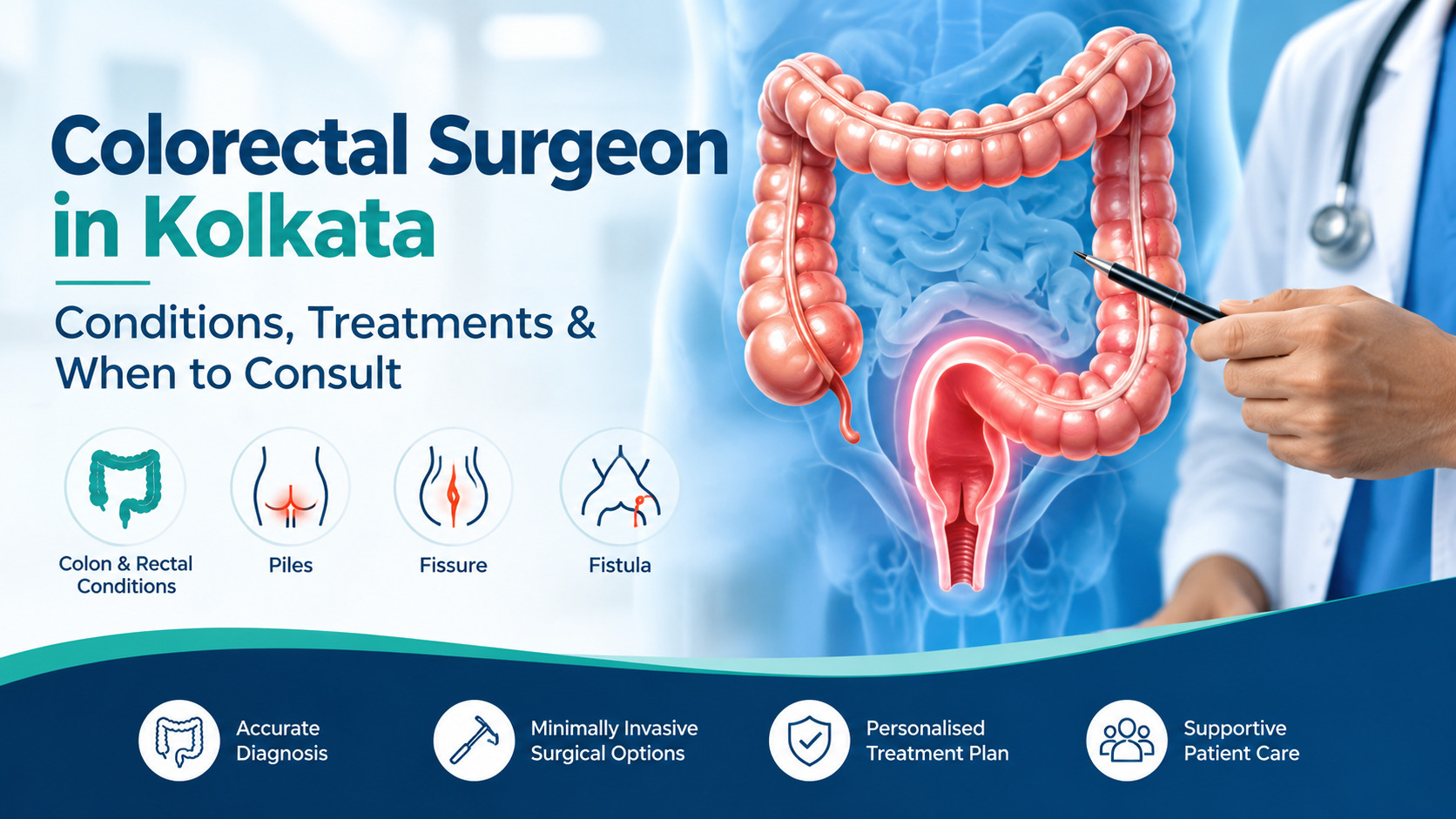
Colorectal Surgeon in Kolkata: Conditions, Treatments & When to Consult
Rectal bleeding, a persistent change in bowel habits or repeated pain during bowel movements can be difficult to discuss. Many people wait, assuming the problem is piles or a temporary digestive upset. Yet symptoms that appear similar can have very different causes. An examination matters more than a guess.
If you are looking for a colorectal surgeon in Kolkata, the first question is not necessarily whether you need an operation. It is what is causing your symptoms, whether further investigation is needed and which clinician is best placed to manage the condition.
For an overview of the doctor’s wider surgical services, start with the Dr. Prasenjit Bhattacharya homepage. It explains his work in laparoscopic, hernia and proctology-related care in the Howrah–Kolkata region.
What does a colorectal surgeon treat?
Colorectal surgery concerns diseases of the colon (large intestine), rectum and anus. Depending on the diagnosis, care may involve medicines, dietary changes, office-based procedures, endoscopy, surgery or referral to a multidisciplinary team. Conditions commonly assessed include:
- Haemorrhoids (piles): swollen vascular cushions that can cause bleeding, prolapse or discomfort.
- Anal fissures: small tears in the anal lining, often associated with sharp pain during bowel movements.
- Anal fistulas and abscesses: infections and abnormal tracts that may require procedural treatment.
- Colon polyps: growths that may be found during colonoscopy and assessed for removal.
- Diverticular disease: pouches in the colon that occasionally become inflamed or complicated.
- Inflammatory bowel disease: conditions such as ulcerative colitis and Crohn’s disease, sometimes requiring coordinated medical and surgical care.
- Colorectal cancer: cancers of the colon or rectum that require staging and an individualized treatment plan.
Not every surgeon treats every one of these conditions. For complex rectal cancer, inflammatory bowel disease or major colorectal resections, ask specifically about the surgeon’s relevant training, case experience and multidisciplinary support.
Symptoms that should prompt medical assessment
Arrange an evaluation if you notice bleeding from the rectum, persistent abdominal pain, a change in bowel habits that does not settle, unexplained weight loss, iron-deficiency anaemia, a new lump near the anus, or repeated discharge or swelling around the anal opening.
Seek urgent care for heavy or ongoing bleeding, fainting, severe abdominal pain with swelling, inability to pass stool or gas accompanied by vomiting, or fever with rapidly worsening anal pain and swelling. These may signal problems that should not wait for a routine appointment.
Is rectal bleeding always caused by piles?
No. Piles are common, but bleeding can also arise from fissures, inflammation, polyps and other bowel conditions. Even if you have previously been diagnosed with haemorrhoids, new or persistent bleeding deserves reassessment. The right tests depend on age, symptoms, examination findings, personal history and family history.
How are colorectal conditions diagnosed?
A consultation generally starts with a careful history: the duration of symptoms, bleeding pattern, bowel habits, pain, medicines, previous operations and family history. The clinician may recommend an abdominal examination and, where appropriate, a rectal examination.
Investigations can include blood tests, anoscopy or proctoscopy for anal symptoms, colonoscopy for selected bowel symptoms or screening, and imaging such as ultrasound, CT or MRI when clinically indicated. A biopsy may be needed when a suspicious lesion is identified. These tests are not interchangeable, and not every patient needs all of them.
When is surgery necessary?
Many colorectal and anorectal complaints can be managed without major surgery. For example, treatment for uncomplicated haemorrhoids may begin with measures to reduce straining and improve stool consistency. An anal fissure may respond to medical treatment. Other problems, such as a persistent anal fistula, a complicated abscess or certain bowel obstructions, may require a procedure.
For suspected or confirmed colorectal cancer, treatment planning depends on the exact site, stage, overall health and specialist assessment. Surgery may be one component of care, alongside other treatments where appropriate. No responsible surgeon should promise that one technique is suitable for every patient.
Laparoscopic versus open colorectal surgery
Some operations on the colon can be performed through small incisions using laparoscopic instruments. Potential benefits in appropriately selected patients may include smaller wounds and a shorter recovery, but these outcomes are not guaranteed. Open surgery may be safer or more appropriate in particular situations, including complex disease or certain emergencies. The choice should follow a discussion of the diagnosis, surgical goals, risks and the operating team’s experience.
How does hernia surgery differ from colorectal surgery?
Hernias and colorectal conditions can both cause abdominal symptoms, but they are not the same diagnosis. A hernia involves tissue protruding through a weakness in the abdominal wall; colorectal disorders affect the large bowel, rectum or anus. The examination and treatment plan therefore differ. For patients researching abdominal surgery in the region, this guide to laparoscopic hernia surgery in Howrah explains a separate but related area of minimally invasive surgical practice.
What about piles, fissures and fistulas?
These conditions affect the anal canal and surrounding tissues and fall within the field of proctology. Although patients sometimes search for a colorectal surgeon when experiencing these symptoms, the best treatment varies considerably. A fistula should not be treated as though it were a fissure, and bleeding should not be attributed to piles without evaluation.
Dr. Prasenjit Bhattacharya describes minimally invasive proctology among his clinical interests. You can review his professional background and surgical training and the website’s treatment information before arranging a consultation.
Choosing a surgeon in Kolkata or Howrah: useful questions
A consultation should help you understand the condition and your options, not merely produce a surgery date. Consider asking:
- What is the most likely diagnosis, and what else could explain my symptoms?
- Do I need colonoscopy, imaging, biopsy or another investigation?
- Can the condition be managed without surgery?
- If surgery is recommended, what procedure is proposed and why?
- What are the important risks, expected recovery and follow-up needs?
- For complex colon or rectal disease, do you routinely perform this operation or recommend a subspecialist team?
Patients travelling from Howrah, central Kolkata or surrounding areas should also consider access to follow-up appointments and emergency care after any procedure.
When to consider a second opinion
A second opinion can be valuable before a major bowel resection, when a diagnosis remains uncertain, when different treatments have been proposed, or when you have been advised to undergo surgery without understanding the alternatives. For cancer, a multidisciplinary review is particularly important.
Frequently asked questions
Does every patient with piles need an operation?
No. Treatment depends on the severity, symptoms and examination. Many patients begin with non-operative measures, while selected cases may benefit from procedures.
Can colorectal cancer cause symptoms similar to piles?
Some symptoms overlap, particularly rectal bleeding. That is why persistent bleeding or changes in bowel habits should be medically assessed rather than self-diagnosed.
Is laparoscopic colorectal surgery suitable for everyone?
No. Suitability depends on the condition, previous operations, overall health and surgical assessment.
Should I see a surgeon for an anal fistula?
A suspected anal fistula should be examined by a clinician experienced in anorectal conditions. Treatment is individualized to the fistula anatomy and its relationship to the sphincter muscles.
Taking the next step
Finding a colorectal surgeon in Kolkata begins with identifying the problem accurately. If you have ongoing bleeding, bowel changes or anorectal discomfort, seek a clinical assessment rather than relying on a symptom label found online. Some conditions need simple treatment; others require investigations or specialist surgical care.
For information about Dr. Prasenjit Bhattacharya’s background in laparoscopic surgery and minimally invasive proctology, visit the About page. To enquire about an appointment and whether your condition falls within his current scope of practice, use the contact page.
Medical note: This article provides general information and cannot replace an individual medical examination or diagnosis.


Comments (0)
Post Your Comment